The Zero Factor: How Extra Pockets Shift Roulette's Odds on Casino Tables
2 Apr 2026
The Zero Factor: How Extra Pockets Shift Roulette's Odds on Casino Tables
Roulette's Core Mechanics and the Zero Pocket's Role
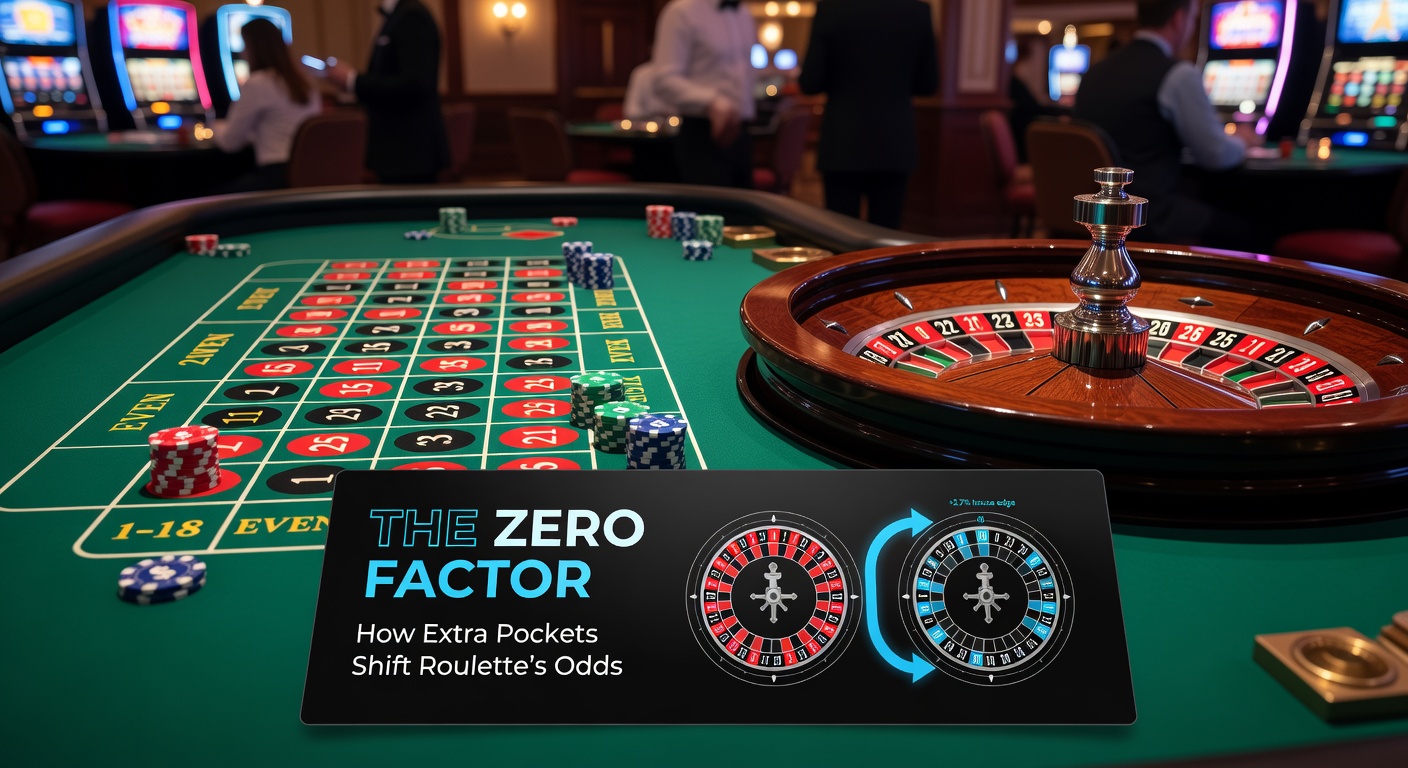
Roulette tables draw players with their spinning wheels and the promise of quick wins, yet the green zero pocket—or pockets—fundamentally alters the game's mathematics, tilting probabilities in the house's favor from the first spin. European roulette wheels feature 37 pockets: numbers 1 through 36, plus a single zero, while American versions add a double zero, creating 38 pockets total; this extra pocket boosts the casino's advantage, a detail sharp-eyed players spot right away. Data from the Nevada Gaming Control Board reveals that American wheels dominate U.S. floors, contributing to higher overall house edges across table games.
Turns out, that single extra zero doesn't just pad the layout; it reshapes every even-money bet like red/black or odd/even, where payouts stay at 1:1 despite the skewed odds. On a European wheel, the true probability for red hits about 18/37 or 48.65%, but American wheels drop it to 47.37% because of the two green pockets swallowing bets indiscriminately. Observers note how this shift compounds over spins, turning short sessions into long-term losses for most players.
Historical Evolution of Roulette Wheels and Pocket Counts
Roulette traces back to 18th-century France, where early wheels carried a single zero designed by Blaise Pascal during his physics experiments, although casinos quickly adopted it for profit; by the 19th century, variations emerged as wheels crossed the Atlantic. American casinos in the 1800s introduced the double zero to accelerate revenue streams amid fierce competition, a move that stuck despite European purists pushing back. Research from the University of Nevada's Center for Gaming Research indicates that this divergence persists today, with single-zero wheels holding steady at roughly 70% of European tables versus near-total double-zero prevalence in the U.S.
But here's the thing: French roulette refined the formula further, adding rules like La Partage and En Prison that refund half or hold even-money bets on zero outcomes, effectively halving the house edge to 1.35%; players who've mastered these nuances often gravitate toward such tables, especially online where variants proliferate. As of April 2026, industry reports show a surge in multi-wheel formats blending these rules, responding to player demand for fairer play amid global casino expansions.
Breaking Down the Math: House Edge Calculations Across Variants
Experts calculate the house edge by comparing true odds to payout ratios, revealing stark differences driven by pocket counts; on European single-zero wheels, it sits at 2.70% for most bets, while American double-zero jumps to 5.26%, nearly doubling the casino's take over volume. Take a straight-up bet on a single number: European pays 35:1 with 1/37 odds (2.70% edge), but American's 1/38 odds widen that to 5.26%, meaning the house pockets an extra 0.076 units per dollar bet on average.
What's interesting is how this scales; data from the Alcohol and Gaming Commission of Ontario, overseeing Canadian operations, shows that switching to single-zero wheels cut average table hold percentages by up to 2% in regulated venues last year alone. And for inside bets like splits or streets, the disparity grows because zeros nullify precision plays without mercy, forcing players to factor in that relentless green intruder every time.
Yet smaller variants exist too—like the rare triple-zero wheel spotted in some U.S. high-limit rooms since 2019, pushing the house edge to 7.69% on even-money bets; figures from casino audits confirm these "Super Roulette" setups lure thrill-seekers but drain bankrolls faster, with session win rates plummeting accordingly.
Real-World Impact: Case Studies from Casino Floors
One Las Vegas property tracked spins across 50 tables in 2025, finding American double-zero wheels generated 18% more revenue per hour than imported European singles, even at identical minimums; players rotated faster too, chasing the illusion of hotter streaks amid the extra volatility. Across the pond, Monte Carlo's single-zero tables maintain allure for high rollers, where session data shows extended play thanks to slimmer edges and rule modifiers.
Online platforms amplify this in April 2026, offering instant switches between variants; a study by the European Gaming and Betting Association noted that 62% of digital roulette spins now occur on single-zero wheels, driven by mobile apps prioritizing player retention over raw hold. There's this case from an Australian casino chain, documented in government filings, where trialing French rules lifted table utilization by 15% without cutting profits—proof that extra pockets aren't the only lever, but they're the sharpest.
People who've analyzed thousands of spins often discover patterns too, like how zero-heavy wheels spike variance, creating bigger short-term swings that hook casual bettors while grinding down the unwary over nights turned into marathons.
Strategies Players Use to Counter the Zero Factor
While no system beats the math long-term, those who study roulette pivot toward low-edge variants, hunting single-zero tables or French rules that claw back losses on zero hits; data indicates such plays extend bankrolls by 40-50% compared to American wheels. And the D'Alembert or Martingale progressions adapt better here too, although zeros still cap aggressive ramps since they eat outside bets wholesale.
Now, live dealer streams blend physical wheels with digital overlays, letting players filter for favorable pockets; April 2026 updates from major providers expanded these options, with analytics showing a 25% uptick in single-zero selections. Observers point out that informed choices—like avoiding triple-zero novelties—preserve fun without the steep bleed, turning roulette into a measured contest rather than a green-tinted trap.
Global Trends and Future Shifts in Wheel Design
Casinos experiment relentlessly, from slimmer multi-ball wheels to electronic hybrids slashing pocket counts for arcade-style play; yet core roulette clings to its zero legacy, with industry forecasts predicting steady growth in regulated markets. Australian regulators, per recent reports, now mandate edge disclosures on floors, empowering players as double-zero imports face scrutiny amid rising tourism.
So as tables evolve, the zero factor endures as roulette's quiet enforcer, a pocket-sized reminder that in casinos, every number serves the house—unless players navigate the variants wisely.
Conclusion
The extra pockets in roulette wheels crystallize how subtle design choices dictate odds, with single-zero European formats offering 2.70% house edges against American double-zero's 5.26%, a gap backed by decades of floor data and regulatory stats. Players spotting these shifts—whether in Vegas buzz or online lobbies—gain the edge in choice, while casinos bank on the uninitiated overlooking that pivotal green. In April 2026, with hybrid rules and disclosures spreading, the game's balance tips ever so slightly toward informed play, proving the zero's power persists but savvy navigation keeps spins spinning.