29 Jun 2026
The Unseen Data Trails: Tracking Player Habits Across Integrated Gaming Platforms

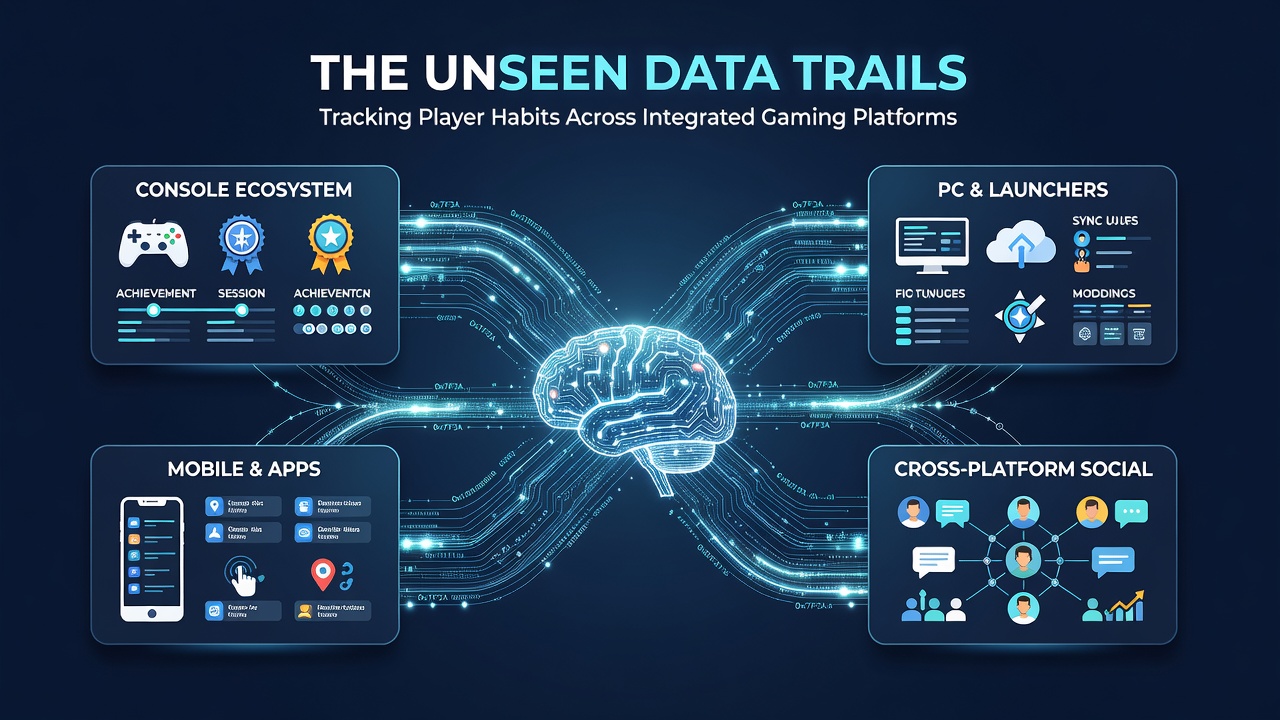
Integrated gaming platforms now collect vast amounts of behavioral information as players move between mobile apps, desktop clients, and console environments, creating detailed profiles that extend far beyond individual sessions. These systems link login credentials, device identifiers, and transaction histories into unified records that follow users across different titles and operators.
Mechanics of Cross-Platform Data Collection
Operators deploy application programming interfaces that synchronize player actions in real time, recording everything from bet sizes and session durations to menu navigation patterns and pause frequencies. When a user switches from a smartphone slot game to a tablet poker table, the same account identifier carries forward accumulated metrics such as average wager frequency and preferred game categories. This linkage relies on persistent tokens stored in cloud databases, which update automatically whenever connectivity resumes.
Researchers at the University of Nevada Reno documented how these tokens aggregate location data, time-zone adjustments, and even accelerometer readings from mobile devices to infer playing contexts like commuting or late-night sessions. The resulting datasets allow platforms to reconstruct complete timelines of activity spanning months or years without requiring separate logins for each environment.
Habit Patterns Captured in Unified Systems
Platforms register sequences such as rapid successive spins followed by extended pauses, which often indicate shifting engagement levels during bonus rounds. They also log device switches within single sessions, noting whether players escalate stakes after moving to larger screens. Figures from the American Gaming Association reveal that cross-device continuity increased average session length by measurable percentages in markets where unified accounts became standard by early 2025.
Additional markers include response times to in-game prompts, frequency of voluntary limit adjustments, and patterns of deposit timing relative to previous wins or losses. These elements combine into behavioral scores that update continuously, feeding recommendation engines and risk-monitoring modules alike.
One study released in March 2026 highlighted how integrated platforms began correlating social features, such as friend-list interactions, with spending velocity across multiple game types. The analysis showed distinct clusters where players who frequently viewed leaderboards also exhibited higher rates of repeated deposits within short windows.
Regulatory and Technical Frameworks Guiding Data Use
Authorities in several jurisdictions require operators to maintain auditable logs that demonstrate how player data informs both personalization and harm-prevention tools. The Malta Gaming Authority, for instance, mandates periodic reviews of algorithmic decision-making that relies on cross-platform histories. Similar expectations appear in Australian state regulations, where operators must demonstrate that tracking mechanisms respect data-minimization principles.
Technical standards developed by the International Gaming Technology Association specify encryption protocols and access controls that protect these trails during transfer between servers. Compliance audits typically examine whether identifiers are anonymized before aggregation for broader analytics, ensuring individual records remain segregated from marketing datasets.
Applications in Personalization and Security
Recommendation systems draw directly from these trails to surface titles that align with demonstrated preferences, adjusting difficulty or volatility settings based on historical completion rates. Security modules flag anomalies such as sudden geographic shifts or unusual device pairings that may signal account compromise. Data from the Gambling Research Exchange Ontario indicates that anomaly detection tied to unified profiles reduced unauthorized access incidents by double-digit margins in participating networks during 2025.
Operators also apply the same information to set dynamic deposit limits that reflect individual spending trajectories rather than fixed thresholds. When patterns suggest accelerating outlay relative to past behavior, automated prompts appear offering cooling-off options before further transactions process.
Developments Anticipated by Mid-2026
By June 2026, several major platform providers plan to incorporate biometric signals from wearable devices into existing tracking suites, provided regulatory clearance is obtained. Early pilot programs already test whether heart-rate variability correlates with decision speed during high-stakes rounds. Parallel efforts focus on federated learning techniques that let models train across operators without centralizing raw player records, addressing growing demands for privacy-preserving analytics.
Industry reports project continued expansion of unified wallets that span multiple jurisdictions, which will further extend the reach of these data trails while triggering additional compliance requirements around cross-border transfers.
Conclusion
The infrastructure supporting player-habit tracking across integrated platforms continues to evolve through incremental technical upgrades and shifting regulatory expectations. Observers note that the same datasets enabling tailored experiences also underpin tools designed to identify and intervene in potentially harmful patterns. As connectivity deepens between devices and services, the granularity of these trails will likely increase, prompting ongoing adjustments in both operational practices and oversight mechanisms.