10 Jun 2026
The Journey of Digital Table Games from Rudimentary Code to Intelligent Systems
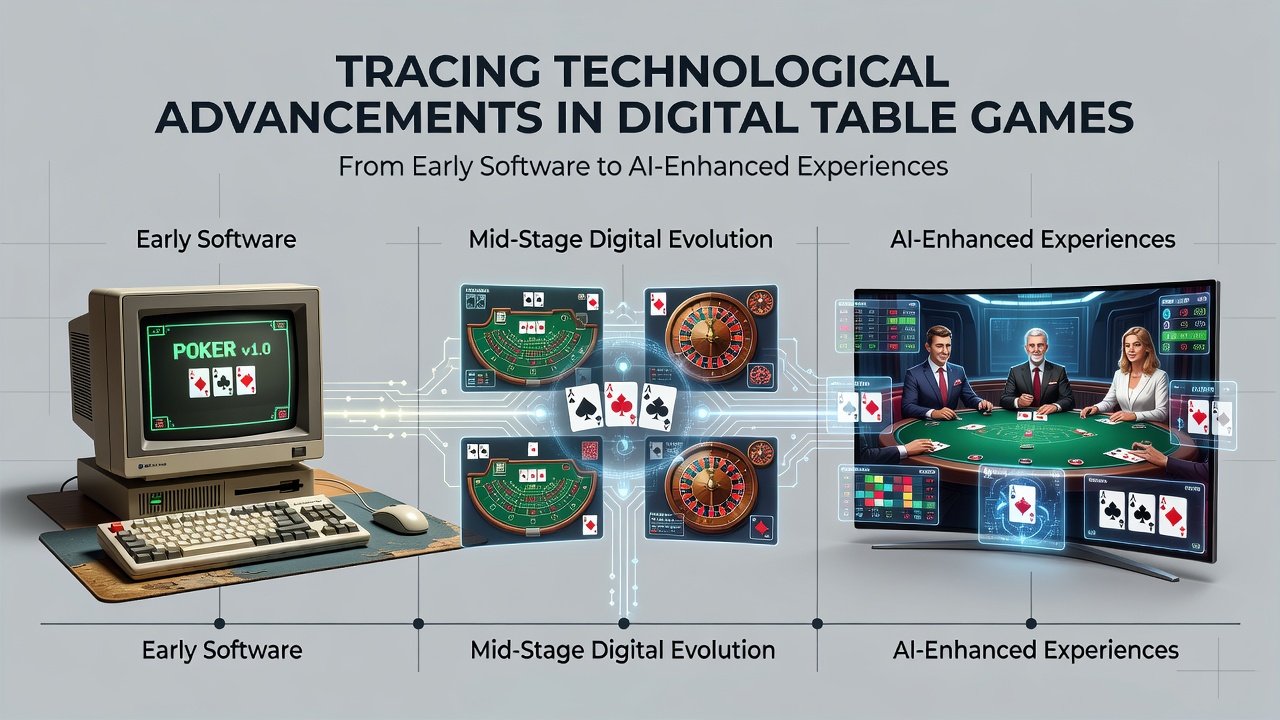
Digital table games began with basic computer programs that simulated card draws and wheel spins through simple random number generators during the late 1970s and early 1980s, and these systems laid groundwork for later online versions that reached wider audiences by the mid-1990s. Researchers at institutions like the University of Nevada documented how initial software relied on deterministic algorithms to replicate physical casino mechanics while operating within the limited processing power of early personal computers.
Initial Software Implementations
Developers created standalone applications for blackjack and roulette that ran on DOS-based systems, and these programs used fixed seed values to produce outcomes that matched house-edge calculations required by regulatory standards at the time. Data from industry reports shows that by 1995 several operators had migrated these simulations to web browsers using early Java applets, which allowed players to access games without installing dedicated hardware. Observers note that transmission speeds often limited graphical quality, yet core probability models remained consistent with those verified through testing protocols established by bodies such as the Nevada Gaming Control Board.
Transition to Networked Platforms
Network infrastructure improvements in the early 2000s enabled real-time multiplayer table games where multiple users could join virtual tables hosted on centralized servers, and this shift coincided with the adoption of SSL encryption to secure financial transactions. Studies conducted by the Australian Gambling Research Centre indicate that bandwidth increases supported higher-resolution card animations and chip movements by 2005, while database logging captured every action for audit purposes. Those who examined server logs from that period found that operators began integrating player tracking modules that recorded betting patterns without altering game fairness parameters.
Live Dealer Integration
Streaming technology introduced live dealer formats around 2006 when broadband connections became widespread, and cameras captured physical cards and roulette wheels that transmitted directly to player interfaces. European regulatory frameworks in Malta required these streams to include multiple camera angles and independent game verification systems, which reduced disputes over outcome authenticity. Evidence from technical white papers reveals that latency compensation algorithms emerged to synchronize player decisions with live action, maintaining the same statistical distributions found in earlier RNG-only versions.
AI adn Machine Learning Applications
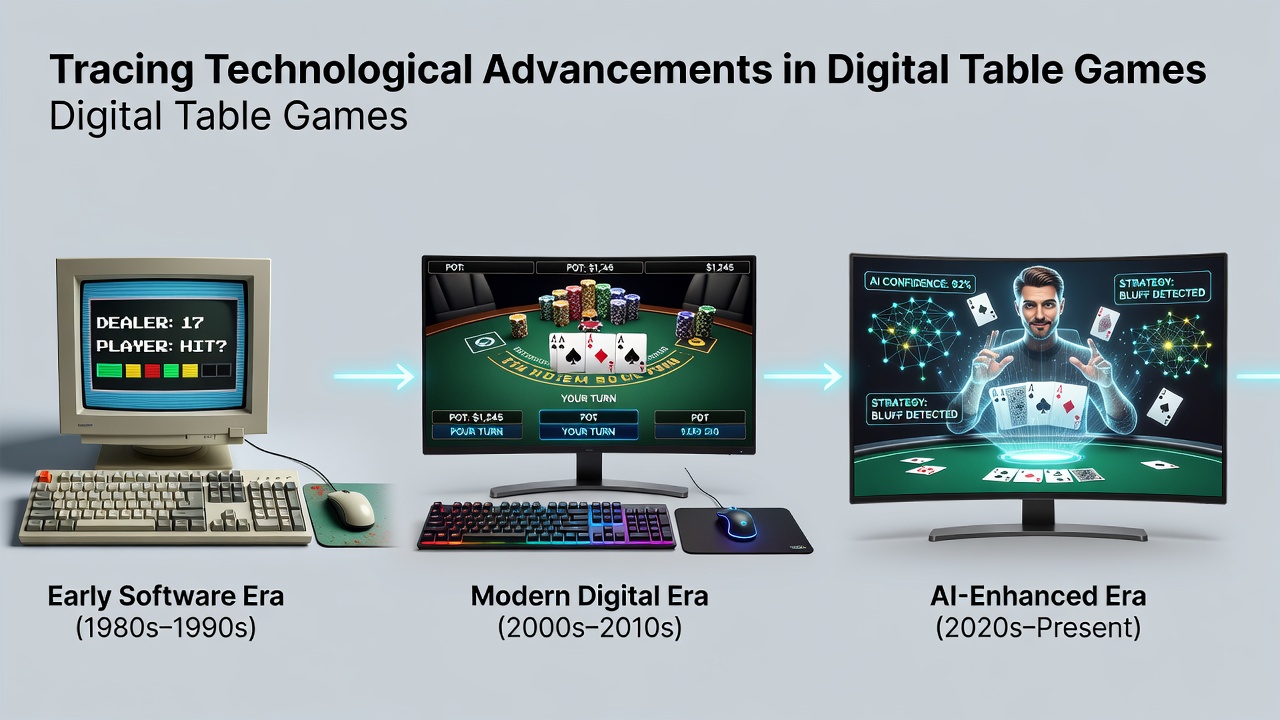
Machine learning models entered digital table game development after 2015 when processing clusters could analyze millions of hand histories in real time, and these systems began adjusting difficulty parameters or suggesting strategy hints based on aggregated player data. A 2023 report from the International Association of Gaming Regulators highlighted how neural networks now detect anomalous betting sequences that might indicate technical faults or external interference, triggering automatic reviews. As of June 2026 several platforms deploy reinforcement learning agents that simulate opponent behavior during off-peak hours, which helps calibrate payout structures without manual recalibration cycles.
Computer vision tools further refined live dealer experiences by automatically tracking card positions and chip stacks, while natural language processing enabled voice-activated commands in select markets. Figures released by research groups at the Technical University of Denmark demonstrate that error rates in automated recognition dropped below 0.2 percent once training datasets exceeded ten million annotated frames. Those who study these implementations note that compliance logs must still undergo human oversight to satisfy licensing conditions across jurisdictions.
Current Infrastructure and Standards
Cloud-based rendering now distributes graphical workloads across edge servers, which reduces input lag for players connecting from various regions, and containerized microservices allow rapid updates to game logic without full redeployments. Industry organizations report that quantum-resistant encryption protocols are under evaluation for future table game networks, although current RSA and elliptic-curve standards continue to meet existing security benchmarks. Regulatory testing laboratories verify each new AI module against predefined randomness criteria before deployment, ensuring that adaptive features do not shift expected return-to-player percentages.
Conclusion
Technological layers accumulated over decades transformed digital table games from isolated software routines into interconnected platforms that incorporate live video, predictive analytics, and automated oversight. Documentation maintained by multiple oversight bodies confirms that each advancement preserved core mathematical integrity while expanding accessibility and verification capabilities. Continued refinement of these systems through 2026 and beyond depends on alignment between computational advances and established regulatory testing procedures.