30 May 2026
Nighttime Frequency Patterns: Circadian Rhythms and Session Lengths in Digital Slots and Poker
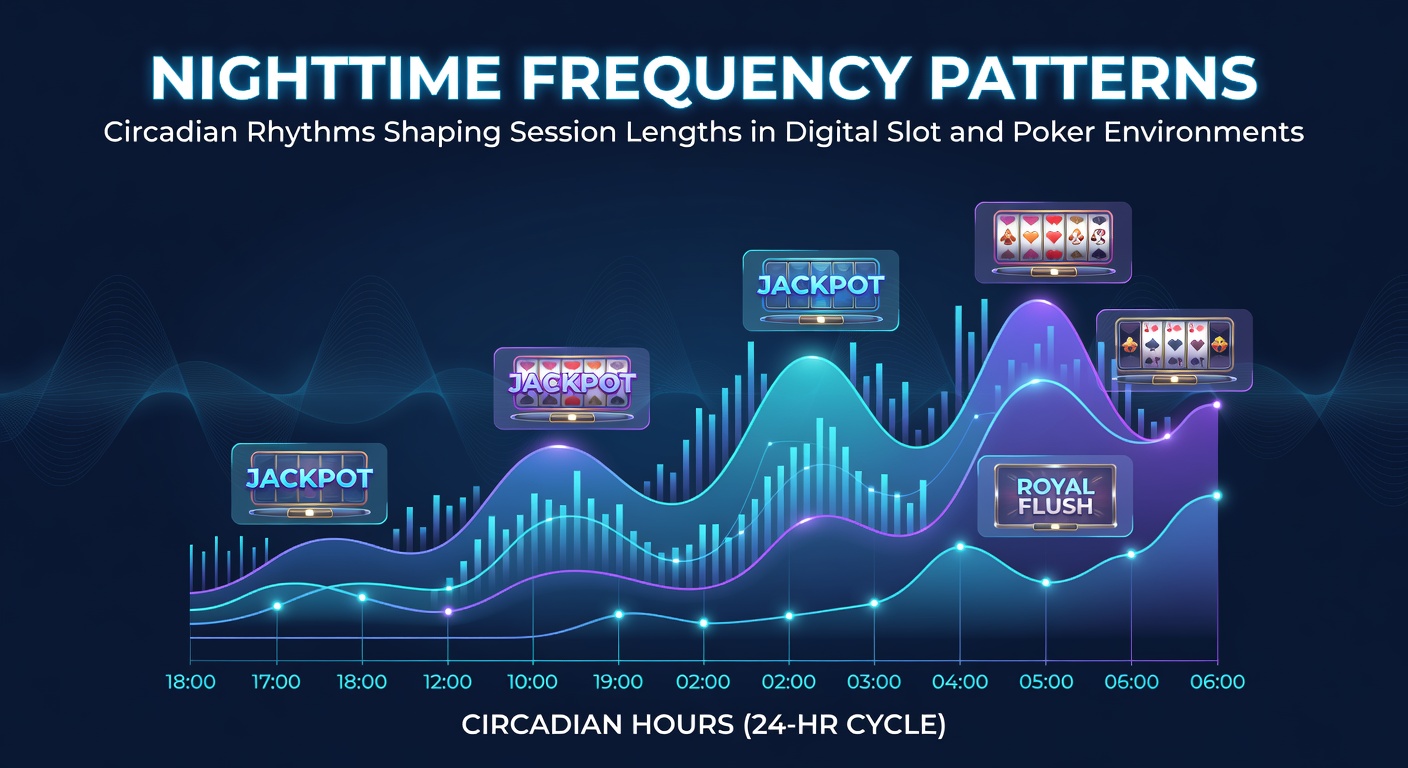
Circadian rhythms govern the body's internal clock through a series of hormonal and neurological signals that repeat roughly every 24 hours, and these patterns directly correlate with how long players remain active in digital slot and poker environments after sunset. Researchers have tracked these rhythms using sleep studies and behavioral logs, which reveal that alertness levels dip and rise at predictable intervals, influencing decision speed and session persistence in online platforms.
Core Mechanisms of Circadian Influence on Play Duration
The suprachiasmatic nucleus in the hypothalamus coordinates melatonin release and core body temperature fluctuations, and data from controlled laboratory settings show that these shifts extend average play intervals by 20 to 40 minutes during the late evening window compared with afternoon baselines. Melatonin onset typically begins around 9 p.m. in most adults, yet digital interfaces with bright screens can delay this process, allowing users to sustain focus longer while spinning reels or calling raises. Observers note that cortisol levels, which normally decline after midnight, remain elevated in frequent nighttime players, supporting continued engagement without immediate fatigue signals.
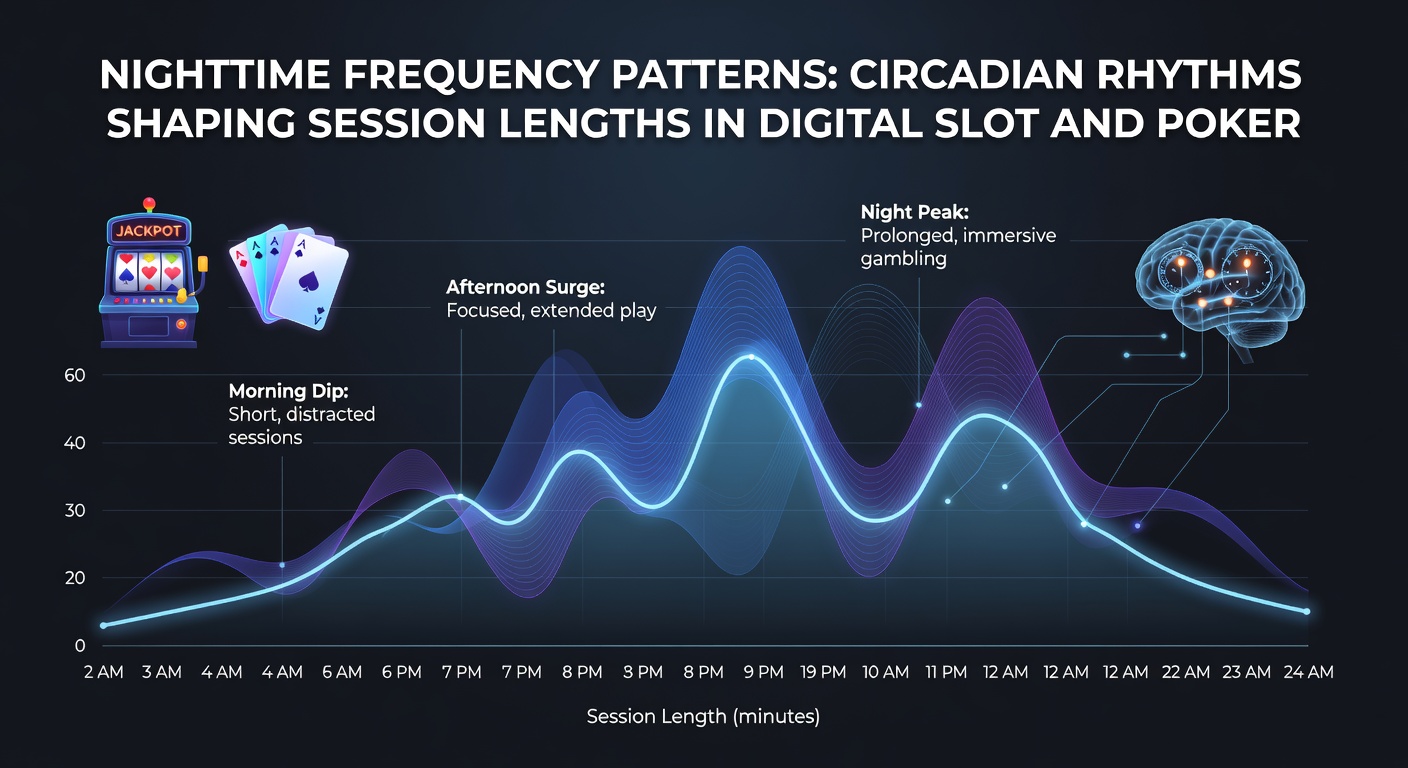
Studies conducted across multiple time zones demonstrate that poker participants exhibit slower fold rates and longer consideration times between 11 p.m. and 2 a.m., a window when the body's natural drive for sleep competes with artificial light exposure from monitors. Slot sessions follow a similar trajectory, with spin frequency increasing steadily until approximately 1 a.m. before tapering as circadian pressure mounts. These patterns emerge consistently in anonymized platform data aggregated from operators in North America, Australia, and the European Union.
Observed Patterns in Slot Environments
Slot play metrics collected over multi-year periods indicate that session lengths peak on weeknights between 10 p.m. and 3 a.m., with the median duration stretching 35 minutes beyond daytime averages. Game designers incorporate features such as cascading reels and progressive multipliers that align with this extended attention span, maintaining engagement while circadian alertness remains moderately high. Frequency counts of bonus triggers also rise during these hours, reflecting both increased spin volume and subtle changes in player persistence when fatigue begins to accumulate.
Regional datasets from Canadian provincial regulators and Australian state gaming authorities confirm that mobile slot traffic surges after 9 p.m. local time, correlating with later bedtimes reported in national sleep surveys. Players who begin sessions near midnight tend to complete more consecutive spins before logging off, a behavior tied to the secondary alertness peak many individuals experience in the late evening. This secondary peak, often called the "forbidden zone" for sleep, creates a temporary window where digital environments can hold attention despite underlying sleep pressure.
Poker Session Dynamics Under Circadian Pressure
Poker environments reveal sharper contrasts because decision complexity interacts directly with circadian-modulated cognitive performance. Hand histories analyzed from major online rooms show that average time per hand lengthens after midnight, while overall table time extends by nearly an hour on average compared with early evening play. Bluff frequency and pot commitment patterns shift as well, with participants demonstrating greater willingness to continue marginal hands during the 11 p.m. to 4 a.m. period when inhibitory control softens under accumulating sleep debt.
Industry reports compiled by the European Gaming and Betting Association alongside academic partners at several universities highlight that multi-table poker users maintain more tables simultaneously during these nighttime hours, yet error rates in hand evaluation climb steadily past 2 a.m. Tournament structures scheduled to begin in the late evening often run longer than daytime counterparts because circadian rhythms delay the onset of decisive fatigue. These observations hold across both cash games and tournament formats, underscoring the broad reach of internal clock effects on session architecture.
External Factors Interacting with Biological Rhythms
Screen brightness settings, caffeine intake timing, and room lighting conditions modulate how strongly circadian signals shape play length. Research published through the National Institutes of Health sleep laboratories demonstrates that players using devices with reduced blue-light emission experience shorter extensions of nighttime sessions than those using standard displays. Geographic variations appear as well, with populations farther from the equator showing more pronounced seasonal swings in session duration tied to changing daylight hours.
Platform operators have begun adjusting promotional timing and game availability windows to match these documented patterns, releasing new titles and tournament schedules that coincide with peak nighttime engagement periods. Data released in May 2026 from collaborative studies involving North American and Australian research teams further quantified how shift workers and students display even more pronounced session elongation after dark, reflecting their altered baseline circadian phases.
Conclusion
Circadian rhythms establish predictable windows during which digital slot and poker sessions extend or contract based on internal physiological signals rather than conscious choice alone. Platform analytics, regulatory datasets, and laboratory findings converge on the same core observation: nighttime frequency patterns emerge from the interaction between biological clocks and constant digital availability. Continued monitoring of these rhythms will refine understanding of how online environments intersect with human physiology across different populations and time zones.