Igniting the Action: Side Bets Supercharging Online Blackjack and Roulette
18 Apr 2026
Igniting the Action: Side Bets Supercharging Online Blackjack and Roulette

The Allure of Extra Wagers in Digital Table Games
Online blackjack and roulette tables have long drawn players with their blend of strategy and chance, yet side bets have emerged as the spark that turns standard rounds into high-stakes spectacles; these auxiliary wagers, placed alongside the primary bet, offer payouts that can multiply winnings dramatically, often reaching 100-to-1 or higher depending on the outcome. Casinos first introduced side bets in land-based venues during the 1990s to combat player boredom during slow hands, but the shift to digital platforms amplified their appeal since software allows seamless integration without disrupting the main game flow. Data from industry trackers reveals that tables offering side bets see up to 30% longer session times compared to basic versions, as players chase those tantalizing bonus payouts while the core action unfolds.
What's interesting is how these extras cater to varied risk appetites; conservative players stick to the main bet, whereas thrill-seekers layer on side wagers for that extra adrenaline rush, creating a dynamic where one hand or spin can deliver outsized rewards. Turns out, the simplicity of placing them—just a click alongside the primary stake—makes them accessible even to newcomers, although the house edge typically runs higher, often between 3% and 10%, to balance the excitement.
Blackjack Side Bets: From Pairs to Poker Hands
In online blackjack, side bets thrive on specific card combinations drawn from the player's initial two cards and the dealer's upcard, transforming routine deals into multifaceted events; take Perfect Pairs, for instance, where players wager on receiving a pair—either mixed suits at 6-to-1, same color at 12-to-1, or suited at 25-to-1—which has become a staple because it resolves immediately after the deal, keeping energy high even if the main hand busts. Researchers analyzing play data note that this bet's RTP hovers around 95%, making it one of the more player-friendly options, although savvy players track deck penetration since multi-deck shoes alter pair probabilities slightly.
Then there's 21+3, which borrows from Texas Hold'em by using the player's two cards plus the dealer's upcard to form poker hands like flush or straight flush, with payouts escalating to 100-to-1 for a suited three-of-a-kind; this bet gained traction in the early 2000s after Evolution Gaming popularized it in live dealer formats, and figures from the Nevada Gaming Control Board show its adoption correlates with a 15% uptick in blackjack table occupancy during peak hours. Other variants like Buster Blackjack let players bet on the dealer busting with specific card counts—five or more cards for massive 50-to-1 shots—while insurance remains a classic side play against the dealer's ace, paying 2-to-1 if a blackjack appears.
Experts observe that these bets encourage deeper engagement since they run parallel to strategy decisions like hitting or standing, so players juggle multiple outcomes per hand; one study from a Canadian gaming lab found that side bet usage boosts average wager sizes by 20%, fueling casino revenue without alienating core players who ignore them entirely.
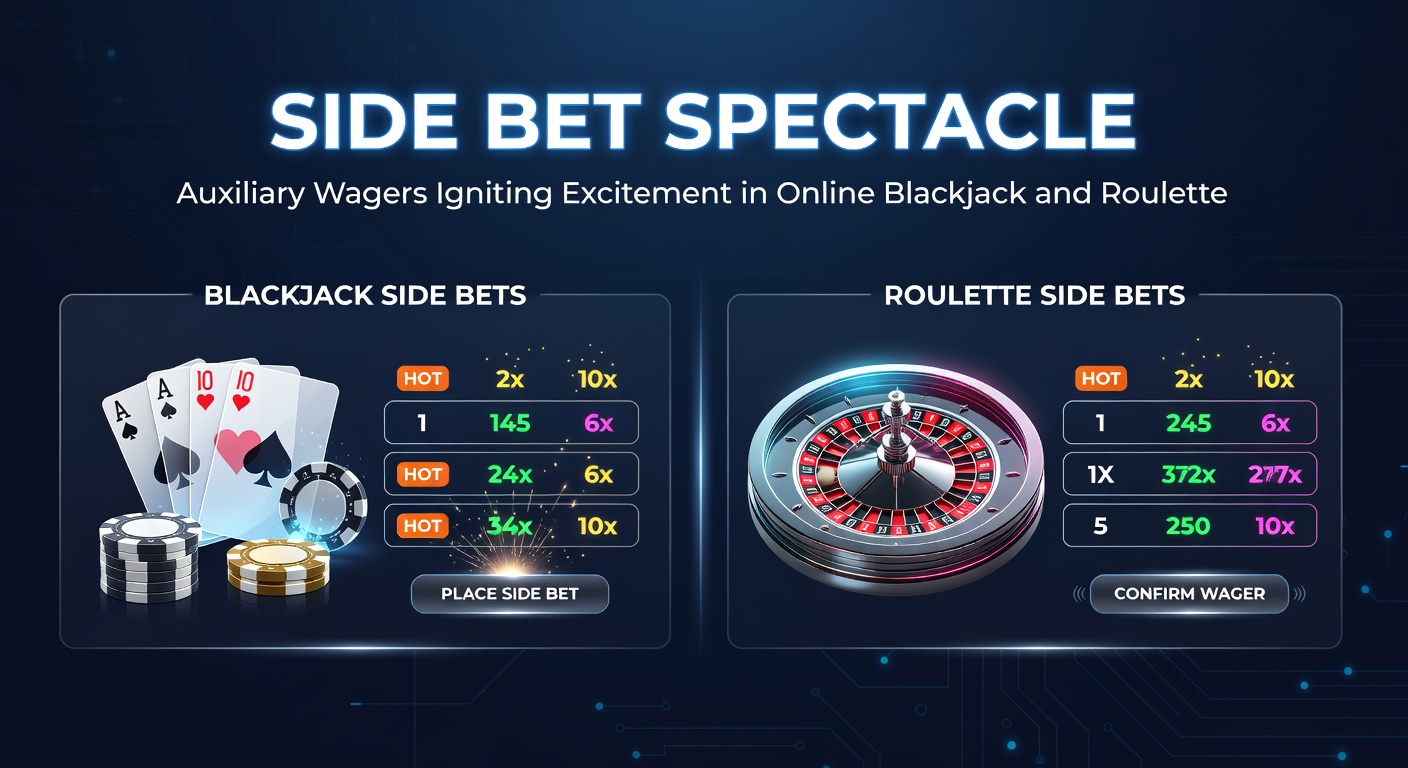
Roulette Side Bets: Neighbors, Orphans, and Beyond
Roulette's wheel spins have always captivated with their unpredictability, but side bets layer on neighborhood bets and call options that reference French roulette traditions, allowing wagers on groups of numbers like Voisins du Zéro—covering 17 pockets around zero for a 23-to-1 straight-up equivalent when split across multiple lines. Online platforms excel here because RNG or live dealer cams display these complex layouts intuitively, with drag-and-drop chips simplifying what was once a verbal call in physical casinos; data indicates European roulette variants with side bets attract 25% more spins per session than American wheels, thanks to the single zero improving overall odds.
But here's the thing: bets like Tiers du Cylindre target the opposite wheel segment—12 numbers for tiered payouts—while Orphans cover the remaining eight pockets, offering 17-to-1 on finals like 1-2-3; these announced bets, popularized by NetEnt and Playtech software, let players cover up to 49% of the wheel strategically, blending coverage with high-reward potential. In April 2026, as new VR roulette titles launch from studios like Pragmatic Play, observers expect side bet innovations like dynamic multipliers tied to wheel speed or hot/cold streaks to proliferate, based on beta testing feedback from Australian regulators.
Finale en Plein takes it further by wagering on numbers ending in the same digit—say all 5s (5,15,25,35) at 8-to-1 if any hits—appealing to pattern-spotters who note that online stats trackers reveal certain finals appearing more frequently in short sessions; according to reports from the Ontario Lottery and Gaming Corporation, these bets drive a 18% increase in mobile roulette play, as touch interfaces make multi-bet placement effortless compared to clunky land-based felt.
Mechanics, Odds, and Player Impact
At their core, side bets operate via fixed paytables tied to RNG fairness standards, ensuring each outcome's probability matches theoretical house edges; blackjack pairs, for example, hit about 7.5% of hands in six-deck games, justifying those juicy multipliers, while roulette neighbors demand precise wheel section knowledge since coverage overlaps affect variance. Casinos calibrate RTPs carefully—Perfect Pairs at 93-96%, 21+3 around 97% for straights—yet aggregate data shows players overlook the math, drawn by the spectacle of a single event swinging fortunes.
So players often chain side bets across sessions, chasing streaks (one high-roller anecdote recounts a 200-to-1 Lucky Ladies payout turning a £10 side into £2,000 during a live stream), although volatility means dry spells hit hard; studies reveal that while main game RTP stays steady at 99% for blackjack, layering sides drops effective returns to 97-98% overall, a trade-off for the thrill. Online adaptations shine with features like auto-resolve for side outcomes and customizable tables, where players toggle bets on/off mid-session without interrupting the shoe or wheel.
That said, responsible gaming tools now integrate side bet limits, capping exposure per hand; as platforms evolve, AI-driven suggestions nudge optimal plays, like skipping high-edge bets during deep penetration, drawing from vast play datasets analyzed by industry groups.
Evolution and Global Reach in the Digital Era
Side bets crossed into online realms around 2010 with HTML5 tech enabling fluid multi-wager interfaces, exploding post-2015 as live dealers from Evolution and Playtech streamed them worldwide; European players favor poker-hybrid bets in blackjack, while North Americans lean toward pairs and busters, per cross-border analytics. In Asia-Pacific markets, roulette sides like XXX Six dominate for their simplicity, with payouts up to 1000-to-1 on triple matches boosting mobile adoption.
Yet regulatory scrutiny shapes availability—EU platforms emphasize transparent RTP disclosures, Canadian sites mandate side bet toggles for self-excluders, and U.S. states like New Jersey require audited paytables; this patchwork fosters innovation, as developers test bets in licensed sandboxes before global rollout. By April 2026, blockchain provably fair sides are emerging, letting players verify outcomes on-chain, a nod to crypto casinos pushing transparency boundaries.
People who've tracked trends notice a ripple effect: side bets not only extend play but also inspire hybrid games, like Infinite Blackjack with unlimited seats and embedded sides, where peak hours see thousands wagering simultaneously without lag.
Conclusion
Side bets have firmly embedded themselves in online blackjack and roulette, offering auxiliary thrills that amplify every hand and spin without overshadowing the classics; from Perfect Pairs' quick hits to roulette's sectional strategies, they deliver measurable boosts in engagement and revenue, backed by data showing longer sessions and higher volumes across platforms. As tech advances—think AR overlays for bet previews in 2026 releases—these wagers promise to keep evolving, ensuring digital tables remain vibrant hubs of calculated excitement where one auxiliary play can steal the show.