3 Aug 2026
From Lone Machines to Linked Fortunes: Mapping the Growth of Cross-Operator Jackpot Networks
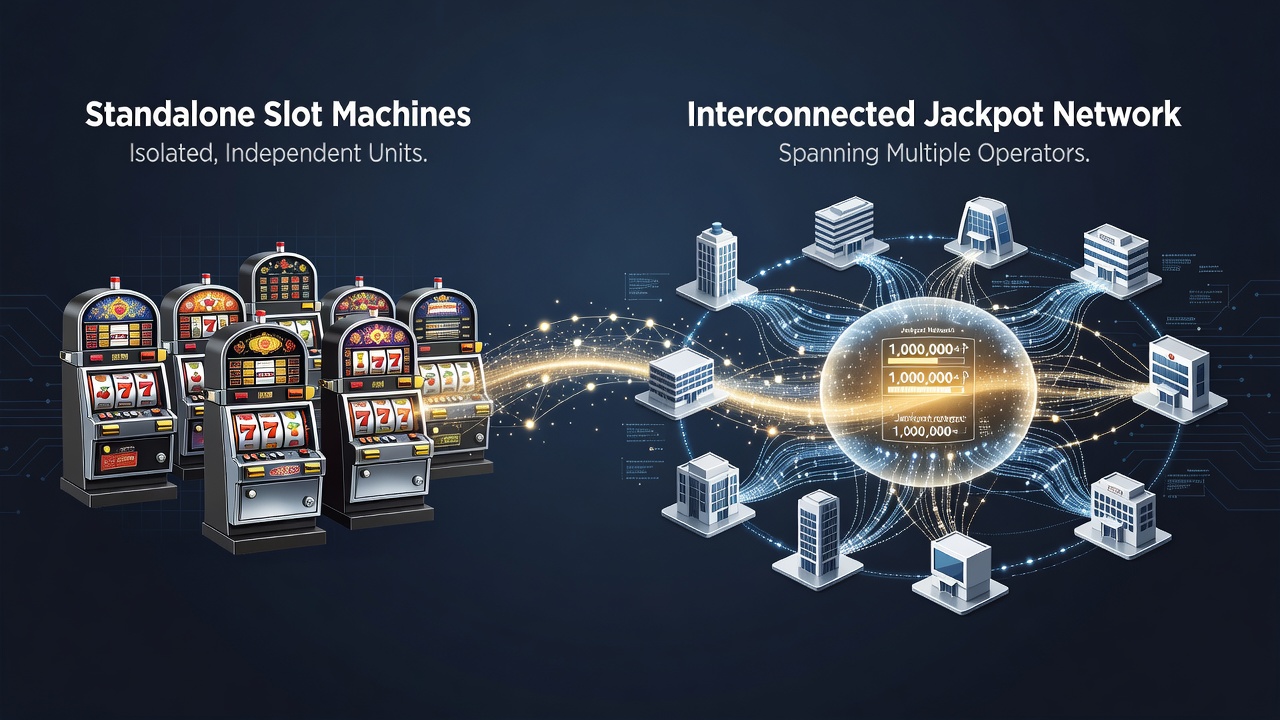
Standalone slot machines once dominated casino floors with each device operating in complete isolation, yet the landscape began to change as operators sought ways to pool player contributions into larger prize pools. Data from regulatory filings shows that the first wide-area progressive systems appeared in the late 1980s when a handful of Nevada properties connected a small number of machines through dedicated phone lines and central servers. Those early connections allowed a single jackpot to grow across multiple sites, drawing larger crowds and extending play sessions because the potential payout scaled with every additional coin wagered on the network.
Early Technical Foundations
Engineers at companies that supplied gaming equipment developed proprietary protocols to synchronize random number generators across locations while maintaining strict separation between each terminal's outcome logic. According to records maintained by the Nevada Gaming Control Board, the Megabucks system launched in 1986 linked roughly a dozen machines at first, and by the mid-1990s the same network spanned dozens of casinos statewide. The architecture relied on dedicated leased lines that transmitted meter readings every few seconds, ensuring the displayed jackpot figure reflected real-time contributions without exposing any single machine to external tampering.
Researchers at the University of Nevada, Las Vegas documented how these initial networks required custom hardware interfaces that converted mechanical reel signals into digital packets, a process that later gave way to fully electronic platforms. Observers note that the shift reduced maintenance costs because central monitoring replaced frequent on-site inspections, while players benefited from the visibility of a steadily climbing prize that could be won at any participating location.
Expansion Beyond Single Jurisdictions
Once regulators in other regions approved the concept, operators in Atlantic City and later in several Australian states joined similar arrangements. Figures released by state gaming authorities in New Jersey indicate that linked progressive slots accounted for an increasing share of total slot revenue by the early 2000s, because the larger jackpots encouraged longer play and attracted visitors from outside the immediate area. The same pattern appeared in Victoria, Australia, where industry reports show multi-venue networks grew steadily after 2005 as operators integrated centralized servers capable of handling thousands of terminals simultaneously.
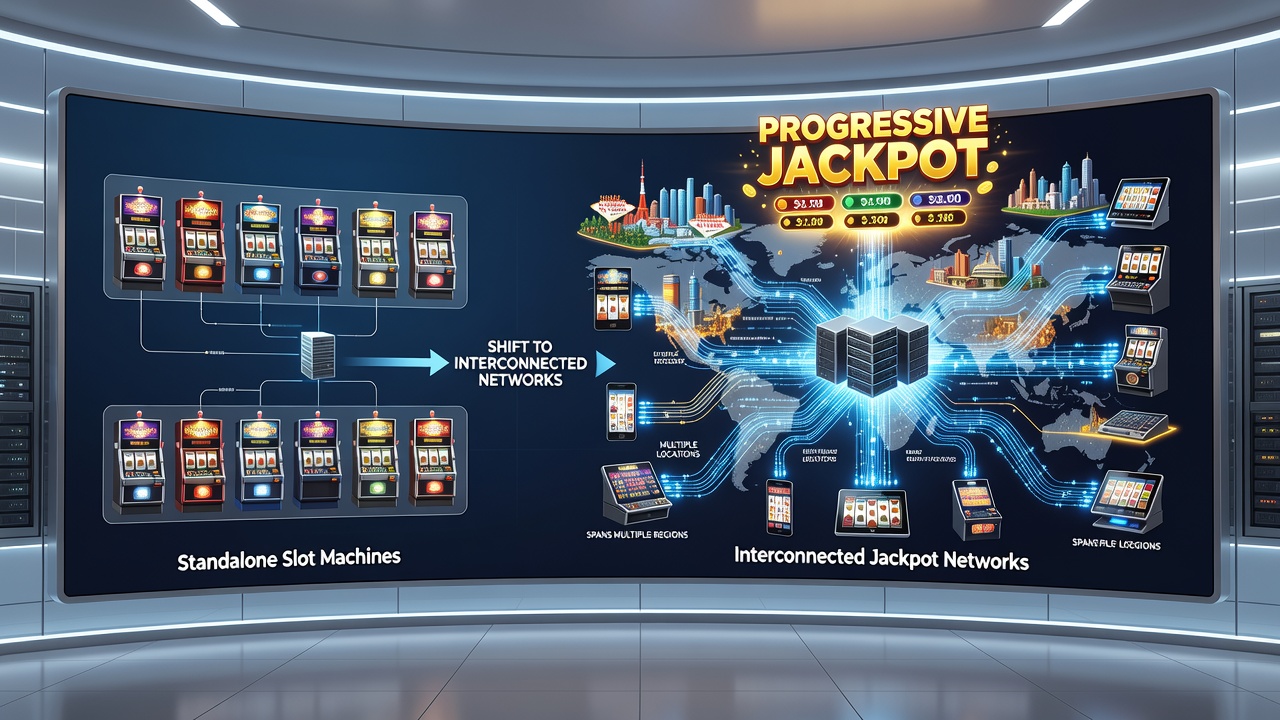
By August 2026 the infrastructure had matured further, with cloud-based platforms allowing a single progressive pool to draw contributions from land-based casinos, online operators, and even mobile applications across different licensing regions. Industry associations such as the American Gaming Association have published summaries indicating that these networks now routinely connect machines operated by competing companies, provided each participant meets the technical and audit standards set by its local regulator. The arrangement creates economies of scale because the cost of maintaining the central random number generator and jackpot controller is shared among many sites rather than duplicated at each property.
Regulatory and Security Considerations
Regulators require independent testing laboratories to certify that each linked machine continues to produce outcomes according to its stated return-to-player percentage even while meters feed into the shared pool. Data from the Australian Communications and Media Authority highlights that cross-border networks must satisfy multiple sets of encryption and logging rules, which has driven adoption of standardized communication protocols such as the Gaming Standards Association's G2S message set. Those protocols allow real-time reconciliation of contributions while preserving an auditable trail that stretches back to every individual wager.
One case study compiled by researchers at the University of Macau examined a regional network spanning several Macau casinos and found that the average jackpot cycle shortened as participation increased, because more wagers accelerated the rate at which the prize reached its theoretical reset point. The study also recorded that player complaints about network outages declined after operators introduced redundant data centers that automatically assume control if the primary server experiences disruption.
Current Scale and Geographic Reach
Contemporary networks often encompass thousands of terminals operated by separate companies yet remain governed by a single central controller that allocates a fixed percentage of each wager to the progressive meter. Reports issued by the European Gaming and Betting Association indicate that several pan-European operators have established jackpot pools that cross multiple national borders while still complying with each country's distinct tax and payout verification requirements. The same documents note that mobile integration now allows a player using a phone in one jurisdiction to contribute to a jackpot that might be won on a land-based terminal elsewhere, provided geolocation and age-verification checks are satisfied before the wager is accepted.
What's interesting is how the underlying mathematics remains unchanged even as the physical footprint expands. Each machine still generates its result locally using an approved random number generator, while only the meter value travels across the network. This separation keeps the integrity of individual game outcomes intact and satisfies regulators that no external party can influence the probability of a jackpot trigger.
Conclusion
The transition from standalone devices to interconnected jackpot networks reflects a steady accumulation of regulatory approvals, technical standards, and commercial agreements that together enable larger prize pools across competing operators. Records maintained by gaming control boards in multiple jurisdictions, together with academic examinations of network performance, demonstrate that these systems have become a standard feature of both land-based and digital gaming environments by 2026. The architecture continues to evolve through updated communication protocols and expanded geographic reach, yet the core principle remains the same: separate machines feeding a shared prize that grows with every additional wager placed anywhere on the network.