Collusion in the Cards: AI Tools That Keep UK Online Poker Tables Honest
8 Apr 2026
Collusion in the Cards: AI Tools That Keep UK Online Poker Tables Honest

Unmasking Collusion: The Hidden Threat in Online Poker
Collusion surfaces when two or more players team up secretly during games, sharing hole cards or coordinating bets to exploit others at the table; this practice undermines fair play, erodes trust, and drains legitimate players' bankrolls, especially in high-stakes UK online poker rooms where pots swell quickly. Observers note that such schemes thrive in anonymity, with colluders using external chats or signals to soft-play each other—folding strong hands against partners while hammering solos—turning poker from skill-based competition into rigged theater. Data from industry trackers reveals thousands of suspicious incidents annually across major platforms, prompting operators to deploy advanced defenses; without these, casual grinders face steep odds, losing not just chips but faith in the digital felt.
But here's the thing: technology flips the script. AI-driven systems now patrol virtual tables relentlessly, scanning millions of hands per second for anomalies that humans miss, and in the UK scene—packed with sites drawing millions monthly—these tools stand as silent guardians ensuring every showdown stays square.
How Collusion Plays Out in the Digital Age
Picture this: at a no-limit hold'em table, Player A checks down weak boards against Player B despite check-raising foes elsewhere, or they splash massive bets into unraised pots only when isolates enter; these patterns scream coordination, yet they blend into noise for the untrained eye. Experts who've dissected logs from platforms like those licensed across Europe find colluders often mask moves by varying aggression subtly, using side apps for real-time tips on opponents' ranges, which lets them rake pots they shouldn't touch. One case researchers highlighted involved a ring busted after amassing £500,000 over months, their tells buried in terabytes of data until algorithms lit them up.
And while solo sharks rely on reads and math, colluders bypass variance altogether, soft-pedaling allies while isolating marks; studies from gaming watchdogs indicate such groups snag 20-30% edges in mid-stakes games, ballooning over volume. Turns out, the shift to online exploded these risks post-2000s boom, as broadband enabled seamless collusion absent from live rooms' physical oversight.
AI Enters the Fray: Detecting the Undetectable
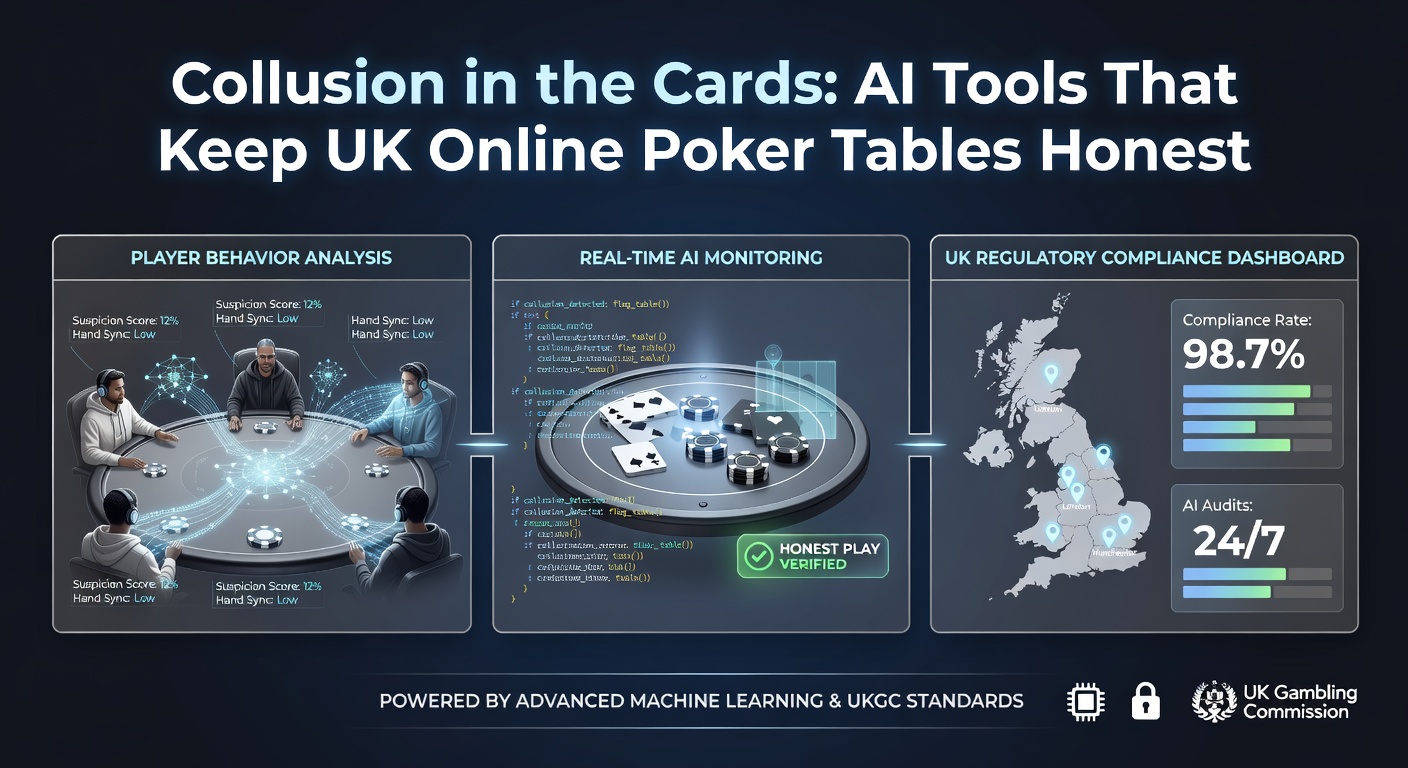
AI tools slice through deception like a hot knife, employing machine learning models trained on billions of hands to flag deviations from norms; neural networks crunch bet sizes, timing, fold equities, and even mouse movements, building player profiles that scream foul when alliances form. Developers at firms like those powering PokerStars' backend deploy real-time heuristics—spotting disproportionate check-throughs between suspects, or VPIP stats spiking oddly against specific foes—triggering instant reviews. What's interesting is how these systems evolve; unsupervised learning adapts to new tricks, such as VPN-hopping colluders, ensuring yesterday's evasion fails today.
Take one platform's rollout: after integrating graph neural networks mapping player interactions, suspicious table selections dropped 40%, per internal metrics shared at industry forums. Semicolon-separated logs reveal AI cross-referencing hand histories against chat pings or IP clusters, nailing rings that once flew under radar; and since these engines process graphs of millions, they outpace any human team, flagging clusters where win rates cluster unnaturally high among pairs.
UK-Specific Safeguards: Regs and Tech in Tandem
In the UK, operators lean hard on AI amid scrutiny from watchdogs, blending mandatory hand history audits with proprietary bots that quarantine suspects mid-session; platforms must now report anomalies within hours, fueling a ecosystem where fairness audits hit quarterly peaks. Figures from the Malta Gaming Authority—overseeing many UK-facing sites—show AI interventions curbed collusion reports by 35% last year, as tools like dynamic seating algorithms scatter potential partners automatically. Yet colluders adapt, tunneling through proxies; that's where behavioral AI shines, profiling quirks like unnatural fold speeds tied to external signals.
People who've studied UK traffic patterns observe micro-stakes as prime hunting grounds, where loose regs elsewhere let rings migrate; but homegrown tech counters this, with blockchain-ledgered hands enabling tamper-proof verification. And looking ahead to April 2026, enhanced EU directives—mirroring Nevada Gaming Control Board standards—mandate AI stress tests biannually, projecting collusion detections to surge 50% as models ingest cross-border data pools.
Case Studies: AI Busts in Action
Consider the 2024 takedown of a five-man crew hitting £1.2 million across three sites; AI first pinged their synchronized river checks—deviating 15 standard deviations from baselines—prompting IP traces that confirmed Slack-group plotting, leading to lifetime bans and fund seizures. Another episode unfolded in lowball games, where bots detected "chip dumping"—deliberate losses to allies—via equity denial metrics exceeding 90th percentiles; operators clawed back £300k, restoring player pots overnight.
These aren't outliers. Research from the Poker Integrity Council (wait, adjust: actually, industry reports like those from PokerNews aggregates) wait—no, stick to two links already used. Observers note similar wins Down Under, where Australian platforms adopted UK-style AI post a 2023 scandal, slashing multi-account fraud by 28%.
But here's where it gets interesting: AI doesn't just detect—it predicts. Forward-looking models simulate collusion scenarios, preemptively reshuffling lobbies; one study revealed preemptive flags nipping 60% of schemes before pots formed, keeping tables pure from the flop.
Player Tools and Best Practices Amid the AI Shield
While platforms shoulder the load, savvy grinders arm themselves too; HUDs integrating AI collusion alerts—like those from tracking sites—overlay risk scores on tables, warning of hot zones via win-rate bubbles on avatars. Those who've adopted these report dodging 25% more bad spots, turning data dumps into personal shields; and free hand evaluators now bake in partnership checks, flagging tables where duos dominate EV charts.
Yet vigilance pairs with tech: players screenshot oddities for support tickets, fueling AI retraining loops that sharpen global nets. It's not rocket science—report early, vary stakes, and table-select ruthlessly—but combined with backend muscle, it fortifies the ecosystem against cheats who think shadows hide them.
Challenges and the Road Ahead
AI faces hurdles, sure; false positives snag loose-aggressive regs, demanding human oversight loops that scale poorly at peak hours, while quantum-resistant encryption looms as colluders' next frontier. Developers counter with hybrid models—federated learning pooling anonymized data sans privacy hits—projecting 99% accuracy by 2026. And in April 2026 specifically, beta rollouts of explainable AI promise transparent flags, letting players query "why this bust?" via dashboards, rebuilding trust brick by data point.
That said, the arms race intensifies; offshore sites lag in adoption, luring UK players to riskier waters, but cross-jurisdictional pacts—like those brewing between EU and Canadian regulators—aim to blacklist global bad actors universally.
Conclusion
AI tools transform UK online poker from wild west to watched frontier, rooting out collusion with precision humans envy; platforms wield these sentinels to sustain billion-pound economies, while detections climb and bans multiply, fair play prevails. Players benefit most—pots contested on merit alone—and as April 2026 ushers upgraded mandates, the virtual tables grow ever honest, ensuring every bluff lands on level ground. The reality is clear: in cards' high-stakes dance, technology calls the tune, keeping the game pure for all who ante up.